PepsiCo Admin Platform
Bringing clarity to complex workflows used to manage products, promotions, and operations
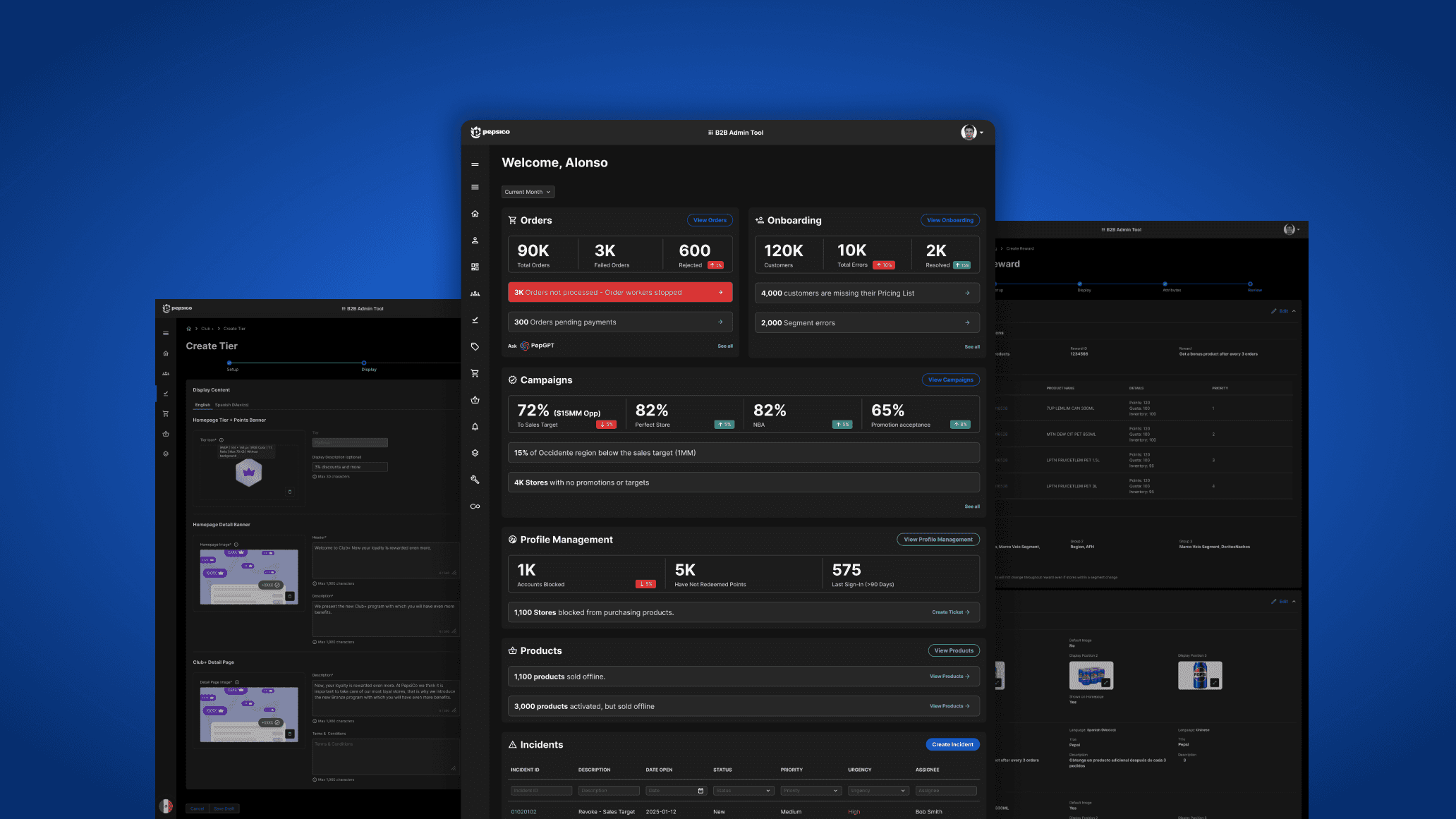
The Admin Tool is the operational backbone of the PepsiConnect ecosystem. It enables Business Units to configure and manage customers, promotions, campaigns, rewards, sales targets, and more, often under tight deadlines and high operational pressure. As the platform expanded globally, its complexity grew faster than its usability.
This project wasn’t about redesigning a screen or polishing UI. It was about turning a highly complex system into a product people could understand, trust, and scale with confidence, while the platform was already live and continuously evolving.
Client
PepsiCo — Global B2B Platform
Responsibility
UX Research · Experience Strategy · Information Architecture · Interaction Design · Design Systems · Stakeholder Alignment
Project Category
Enterprise Product Design
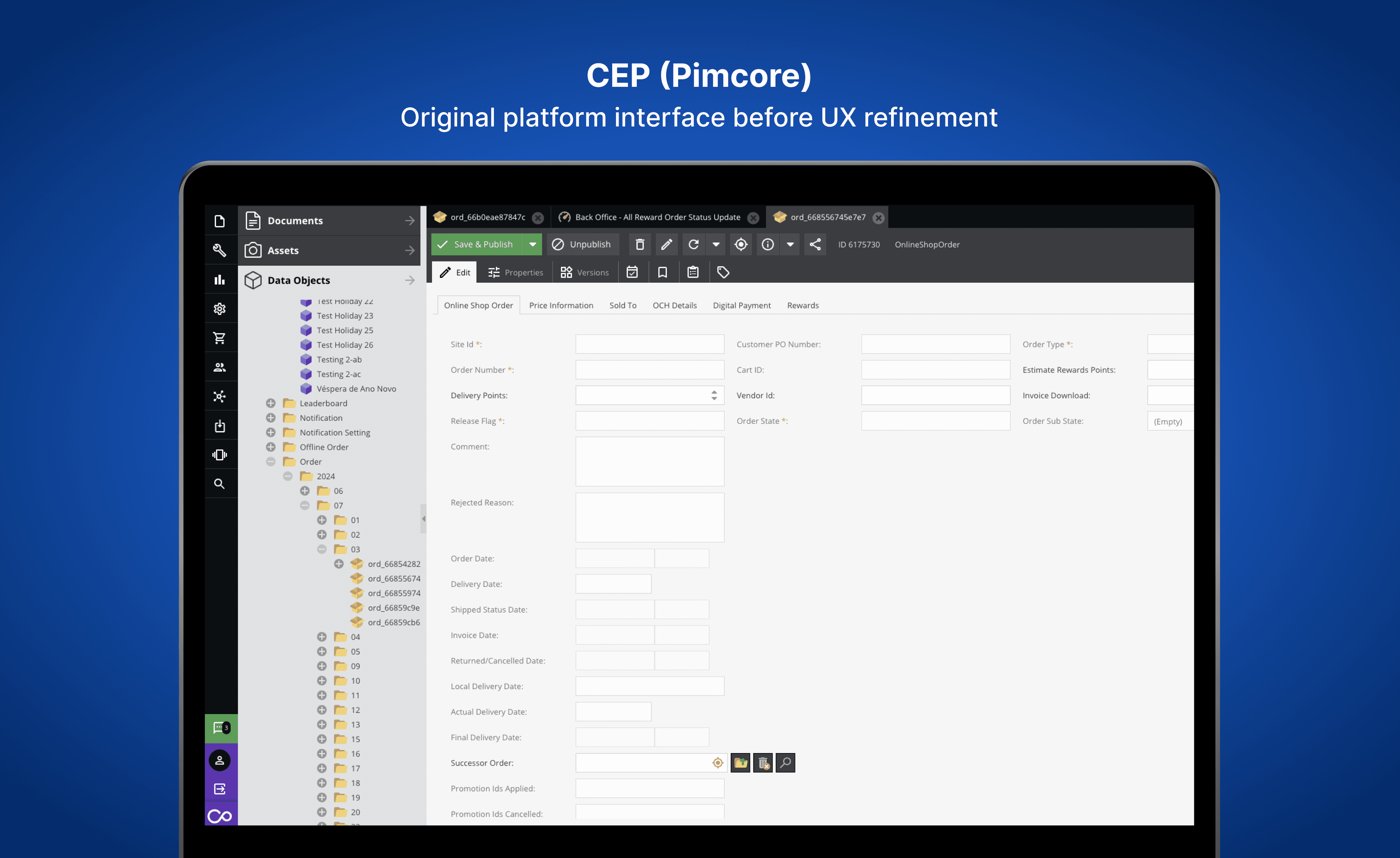
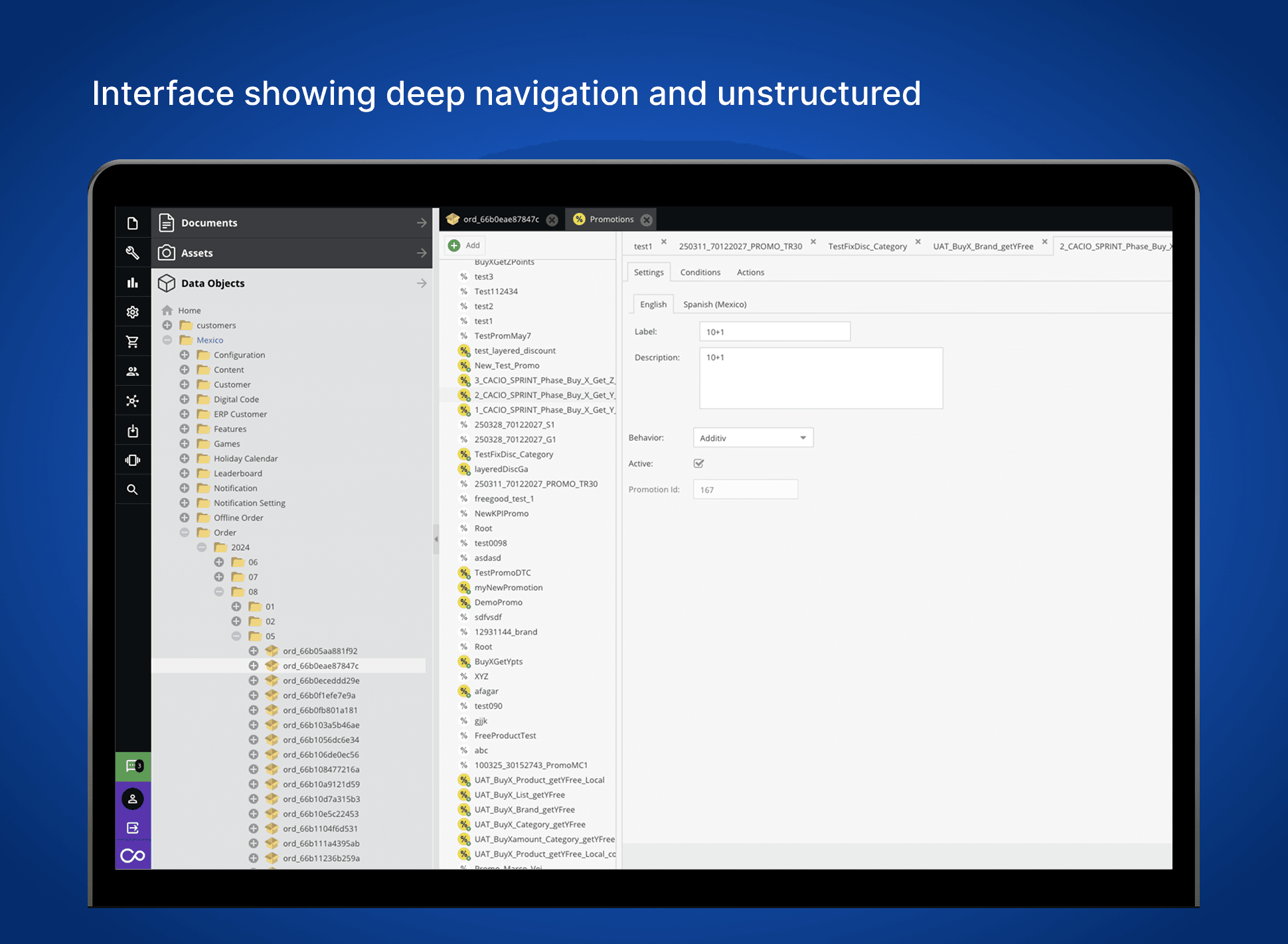
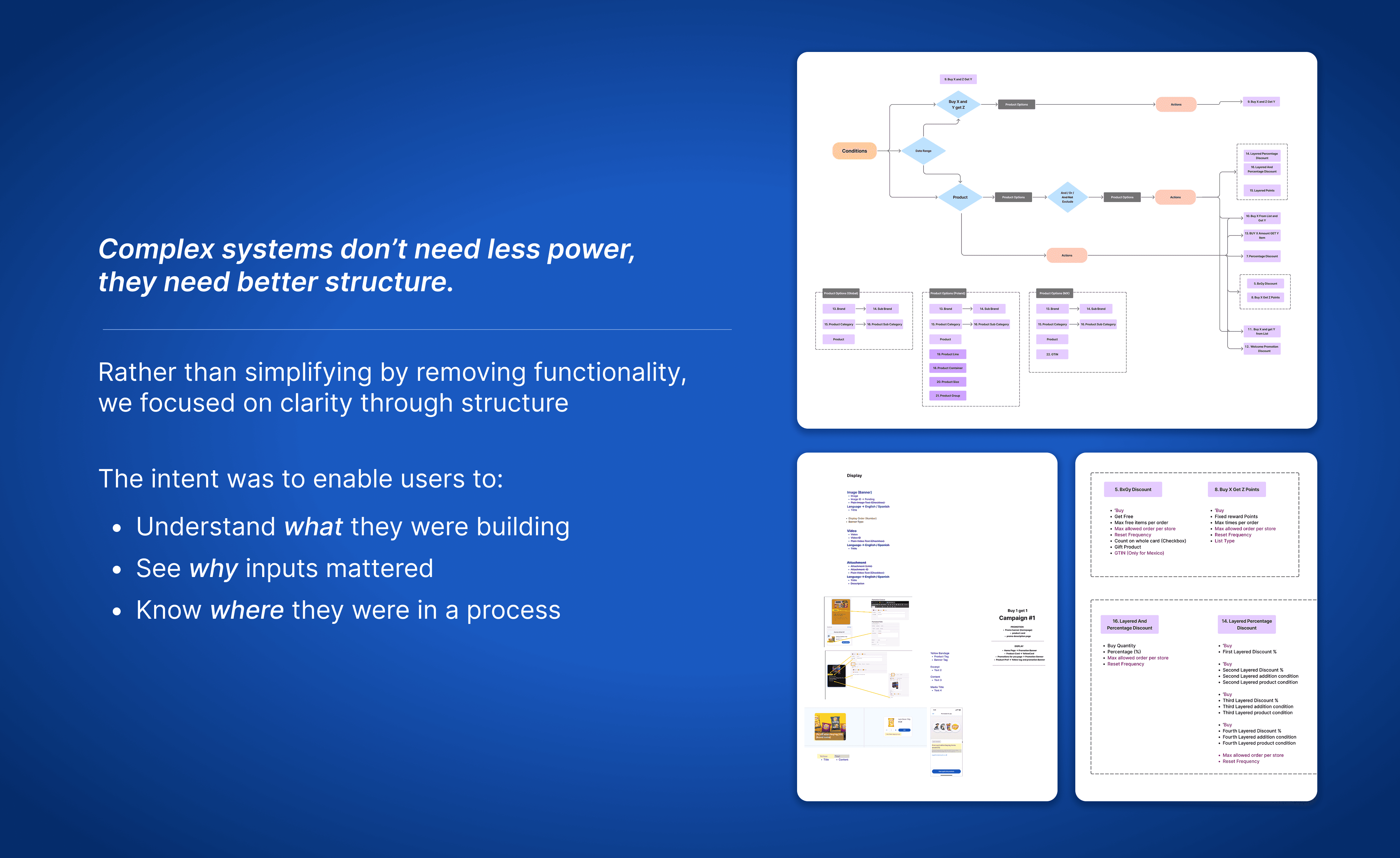
The original platform, built on Pimcore / CEP, exposed its full technical power directly to users. Instead of guiding them, it asked users to adapt to the system’s internal logic.
Navigation was deep and fragmented. Forms were long, dense, and filled with inputs whose purpose wasn’t always clear. Completing a single task often meant jumping across multiple sections, remembering hidden dependencies, and validating outcomes only at the very end.
As the product expanded across markets, complexity compounded.
What should have been operational work became cognitive labor.
The result was slower execution, higher error rates, and low confidence even among expert users.
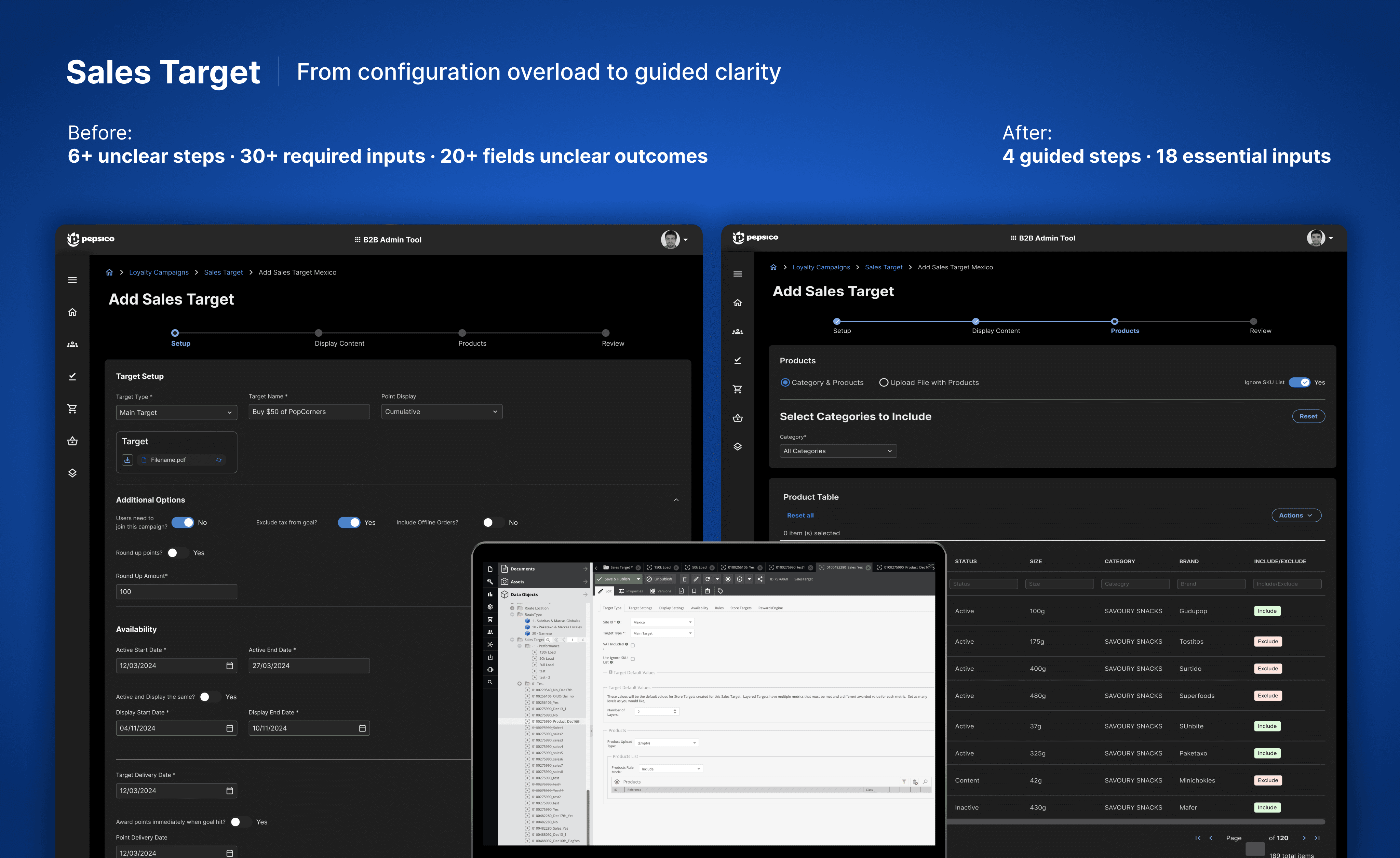
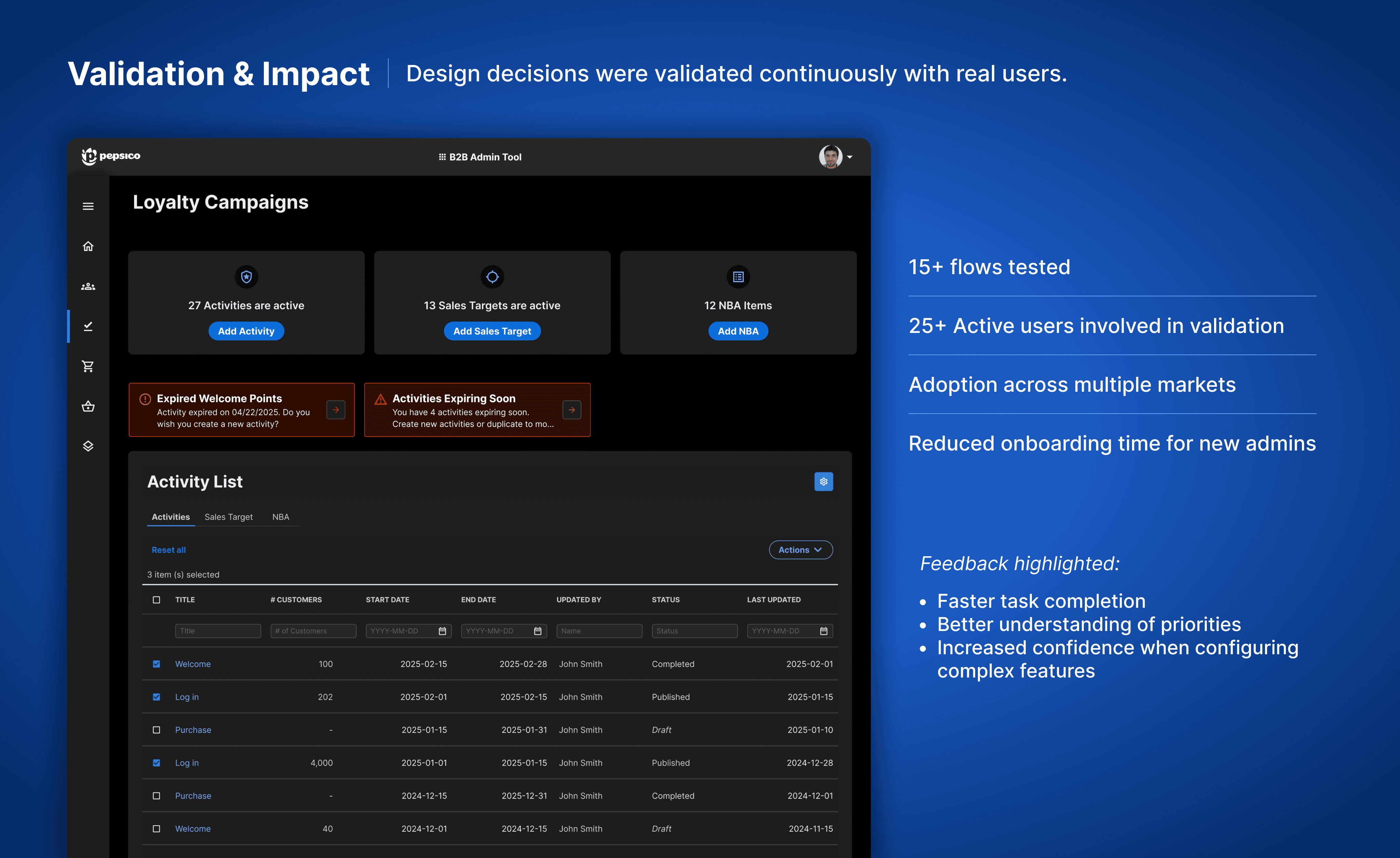
This product evolved through continuous collaboration, not linear handoffs.
From the beginning, I worked closely with Business Unit admins, product partners, engineers, and the PepsiConnect UX team to understand real operational workflows, often observing how work happened both inside and outside the tool.
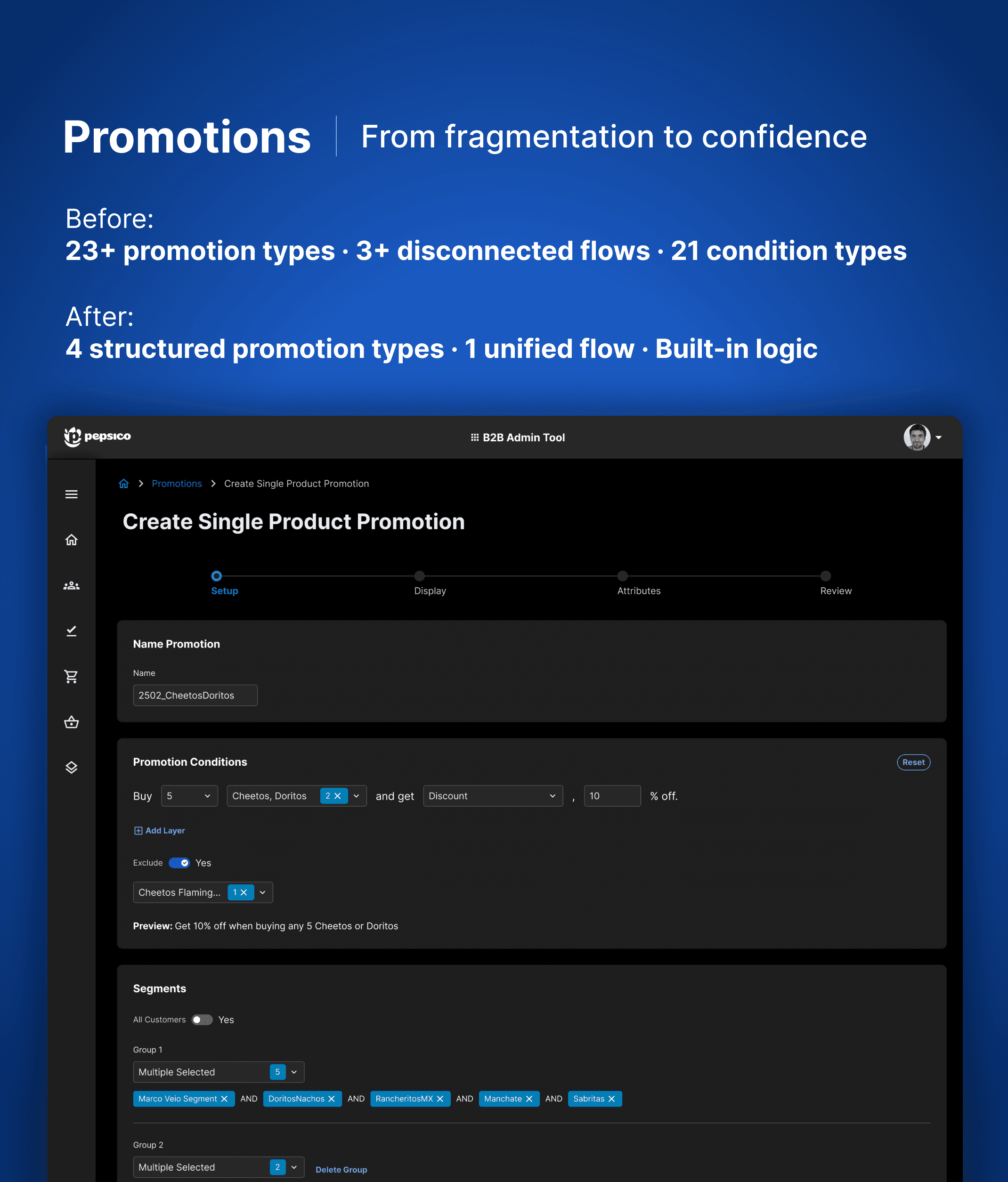
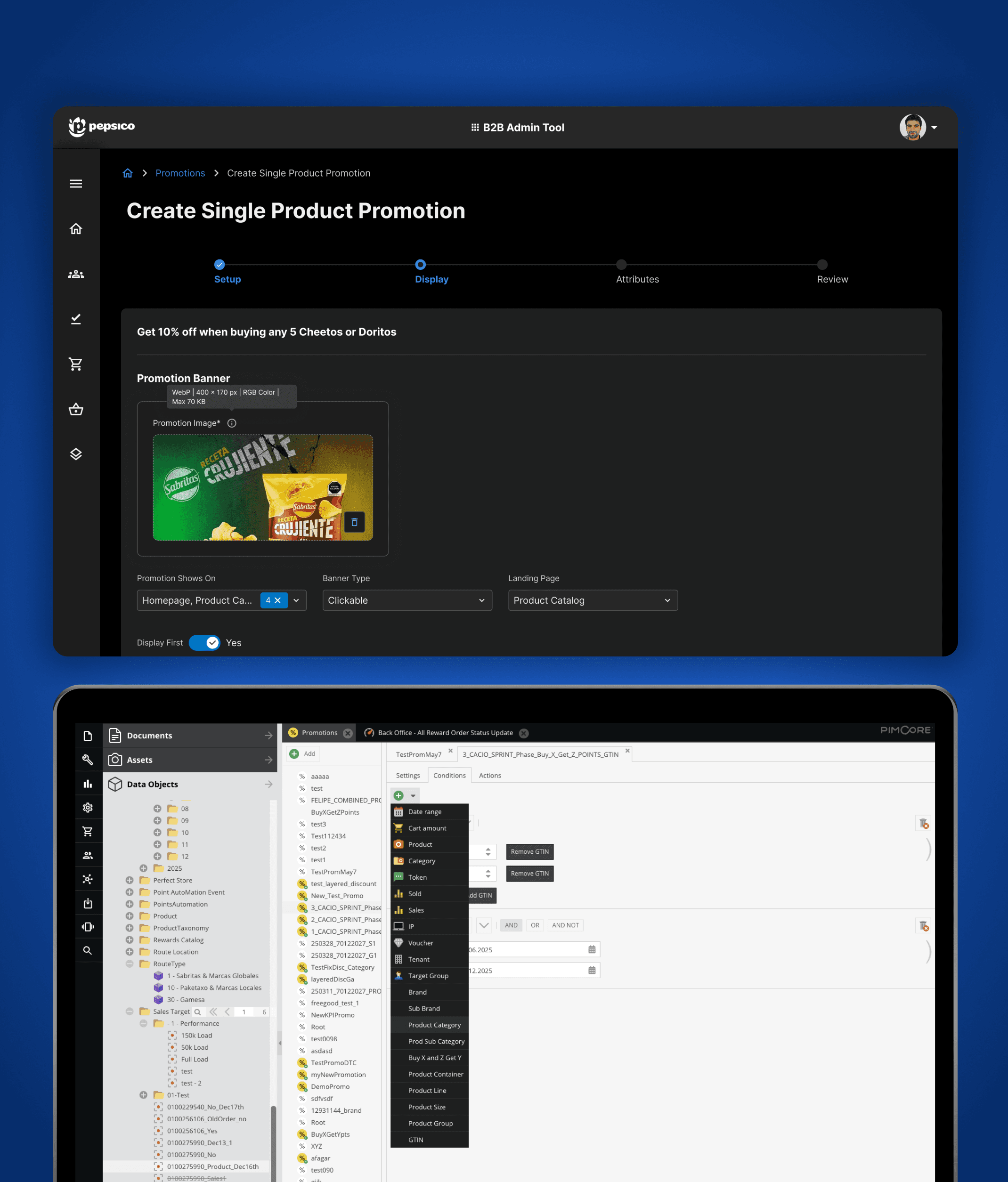
This work was shaped through long-term collaboration across product, engineering, and Business Unit teams, redesigning and validating 38+ critical flows across 10+ Business Units in markets including Colombia, India, Argentina, Mexico, the U.S., Turkey, Poland, and beyond.
As the project matured, so did my role. I was part of the initiative from day one and gradually took ownership of core UX strategy, navigation, and UI system decisions. Over time, I stepped into a design leadership role, helping frame problems, drive simplification, and translate ambiguity into clear product direction.
This was very much a team effort, but I played a key role in ensuring the product evolved as a coherent, scalable experience, rather than a collection of disconnected features.