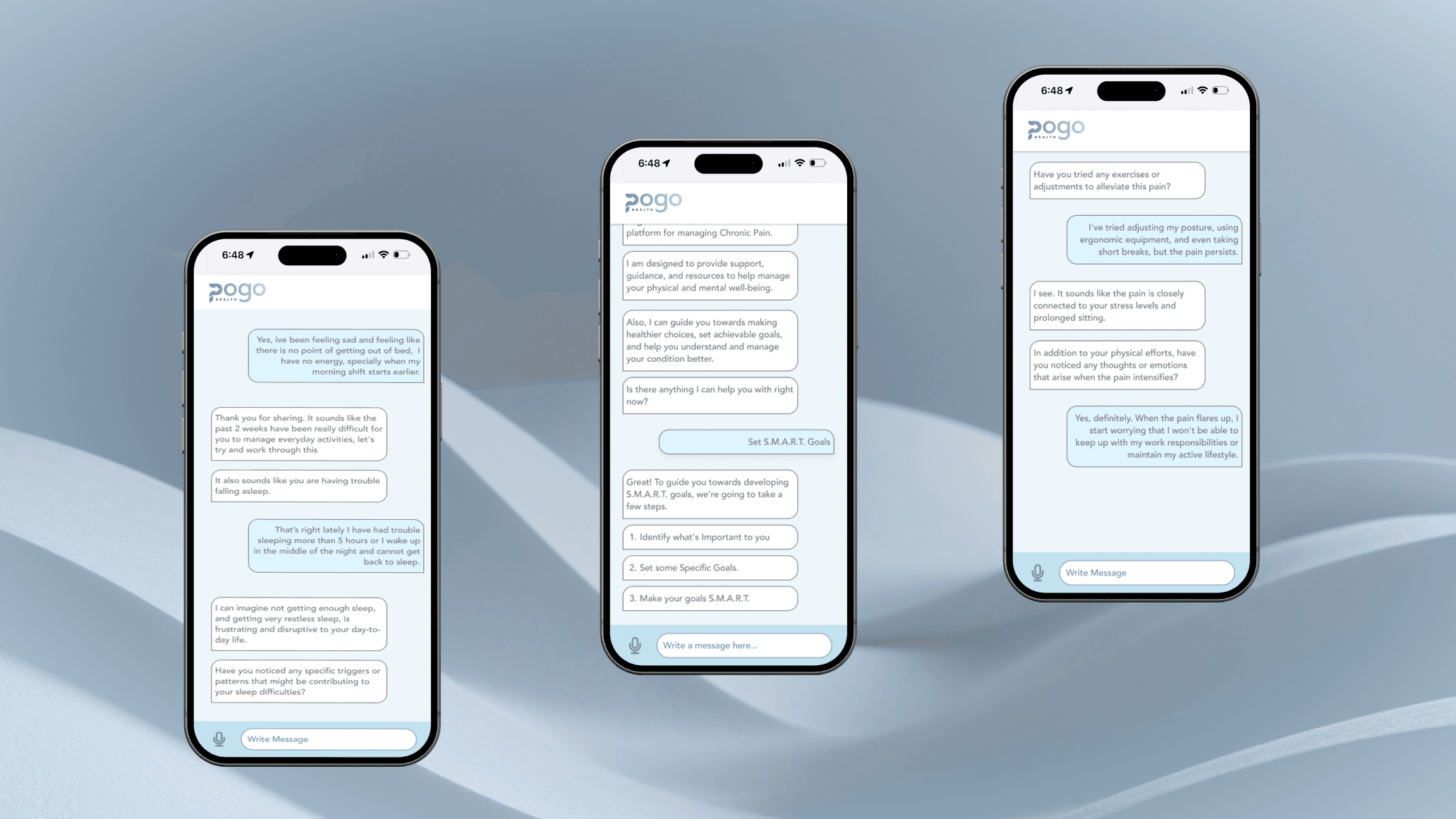
Pogo Health · AI Care Experience
Designing an AI-powered experience to support people living with chronic pain

Pogo Health is a virtual, interdisciplinary healthcare team combining pain physicians, pain therapists, and specialized health coaches to support patients living with chronic pain.
As the program evolved, Pogo Health explored how AI could extend care beyond clinical appointments, offering real-time guidance, motivation, and emotional support in everyday moments. The challenge was not automation, but designing an AI experience that felt safe, empathetic, and aware of its limits.
The AI coach was grounded in Acceptance and Commitment Therapy (ACT) and Cognitive Behavioral Therapy (CBT), requiring the experience to balance structure, flexibility, and trust.
Client
Pogo Health
Responsibility
UX Research · User Journeys · Interaction Design· AI Experience Design · Testing
Project Category
Digital Health Product
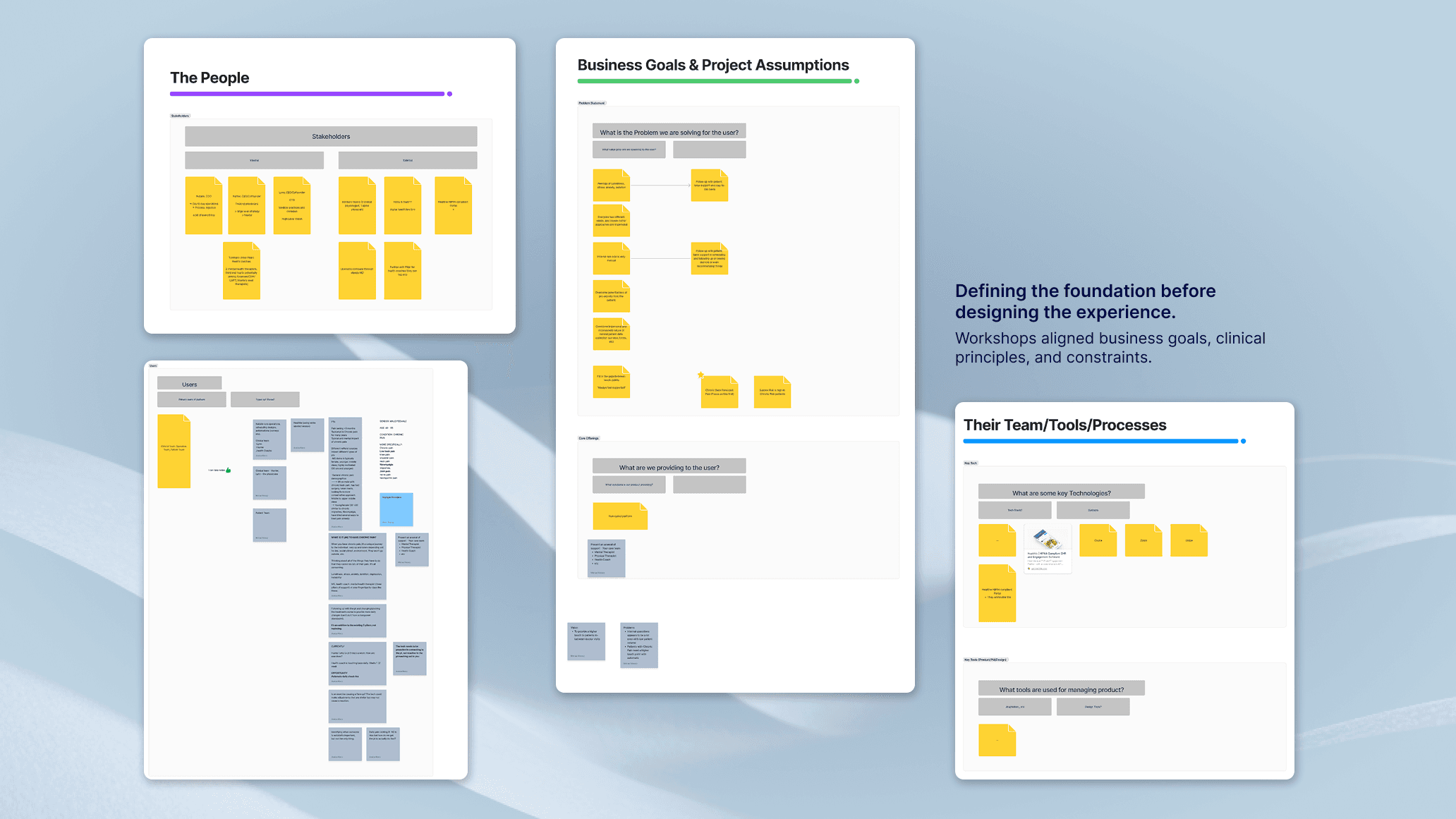
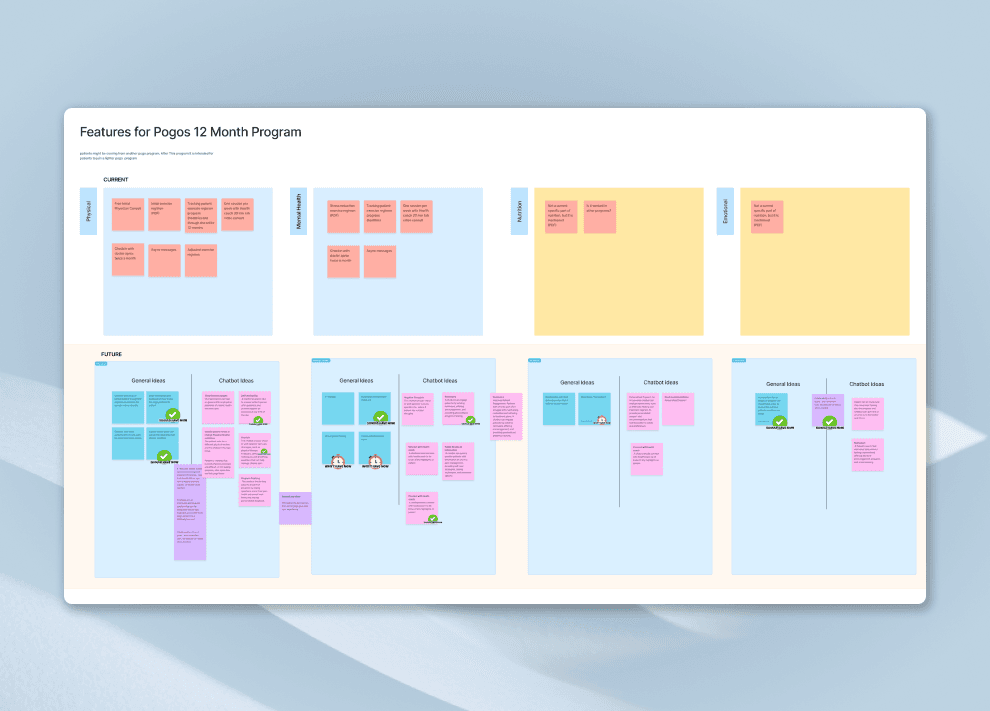
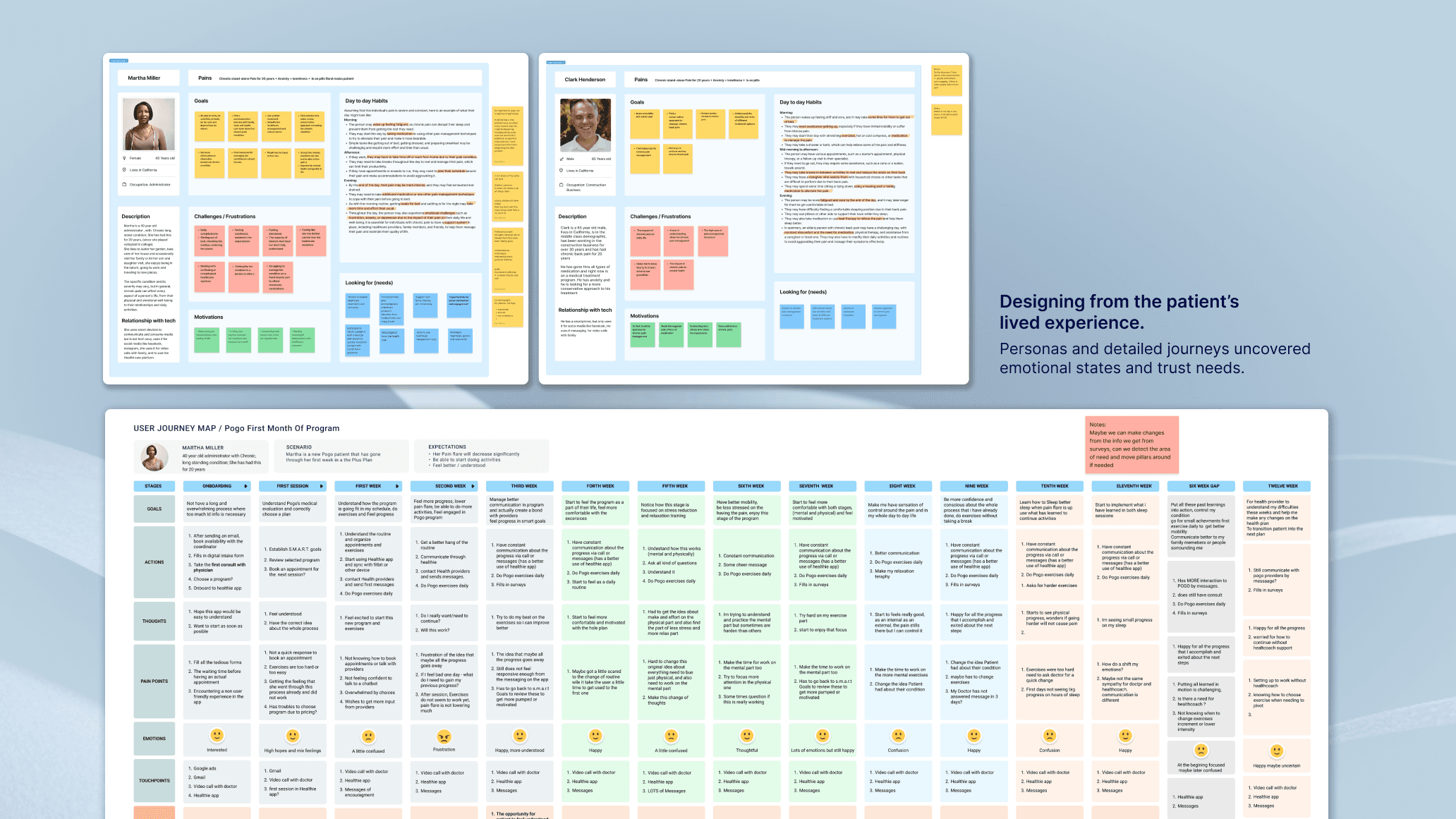
With a clear understanding of the clinical constraints, care system, and patient realities, the focus shifted from research to defining how the AI coach should behave in real interactions.
Insights from workshops, journeys, and personas were translated into structured conversation logic establishing tone, pacing, boundaries, and escalation points. This system-first approach ensured the AI supported patients with empathy and clarity while remaining aligned with Pogo Health’s therapeutic principles and aware of its limits.
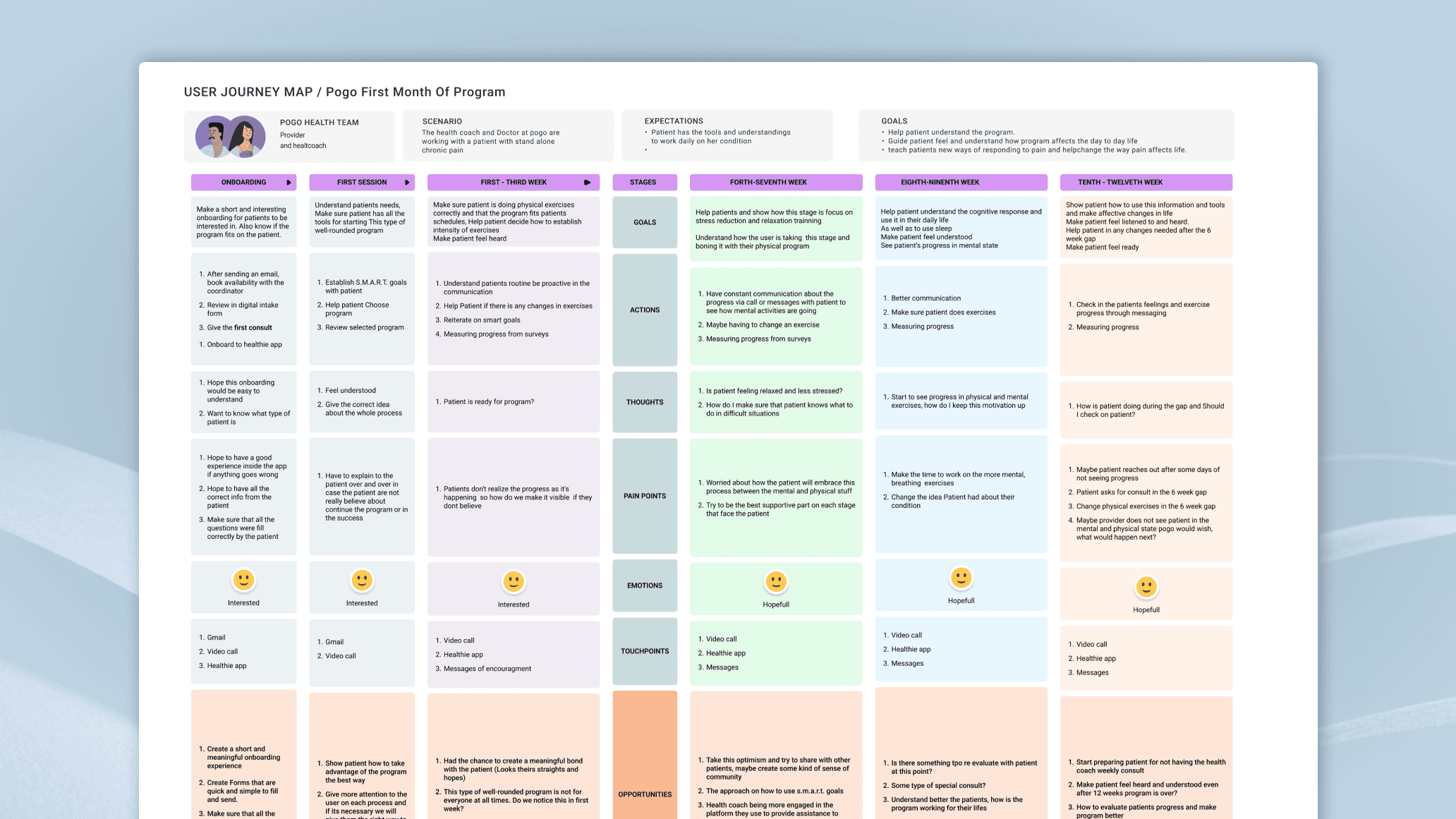
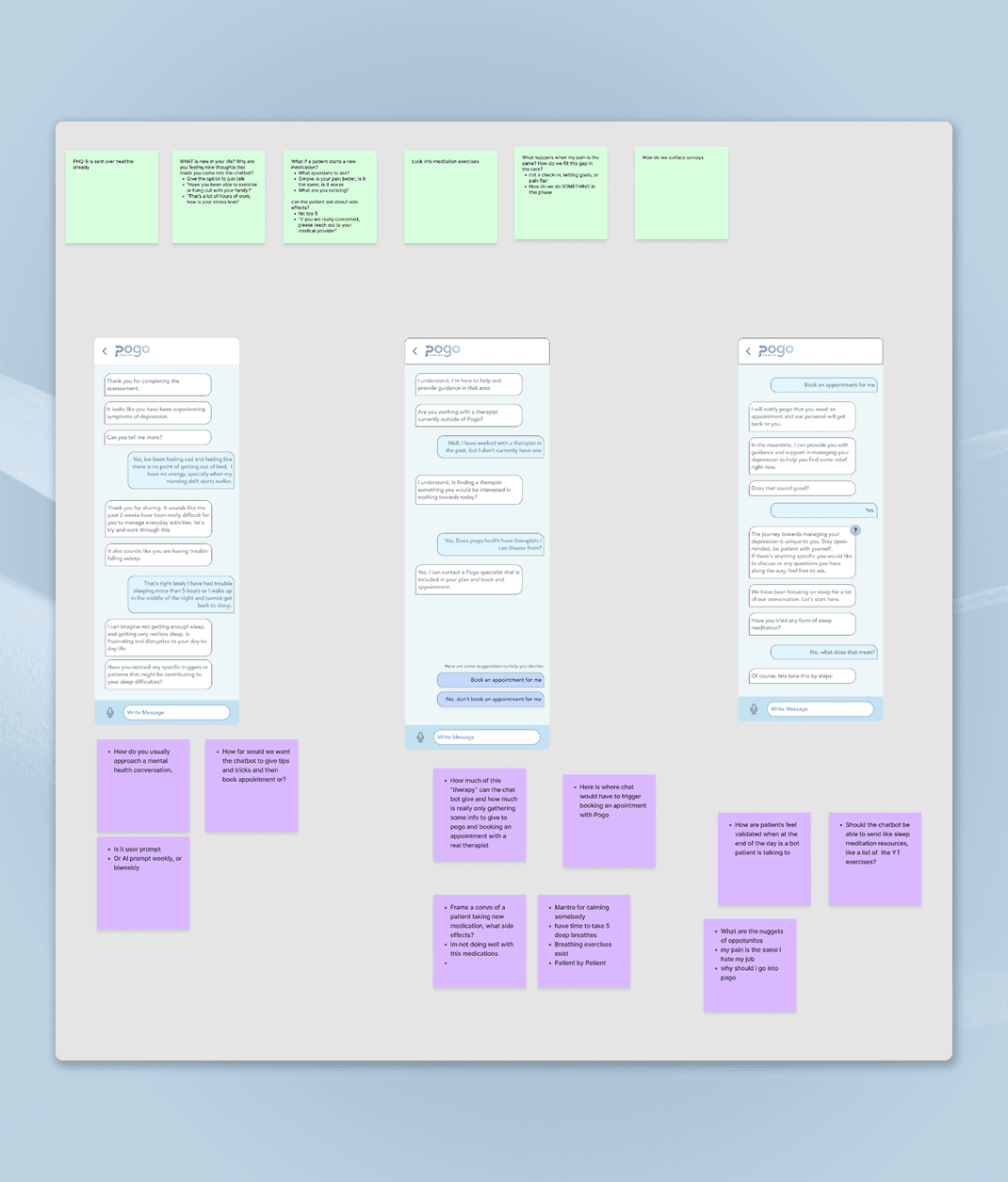
Designing the AI coach required translating clinical principles into tangible, testable experiences. I designed four interactive prototypes, each representing a core responsibility of the AI and a different type of patient interaction:
Understanding the patient’s context
Supporting S.M.A.R.T. goal setting
Guiding physical treatment routines
Providing mental and emotional support
Together, these prototypes defined conversation logic, tone, and interaction flow, and served as the foundation for validating how the AI should behave in real patient scenarios.
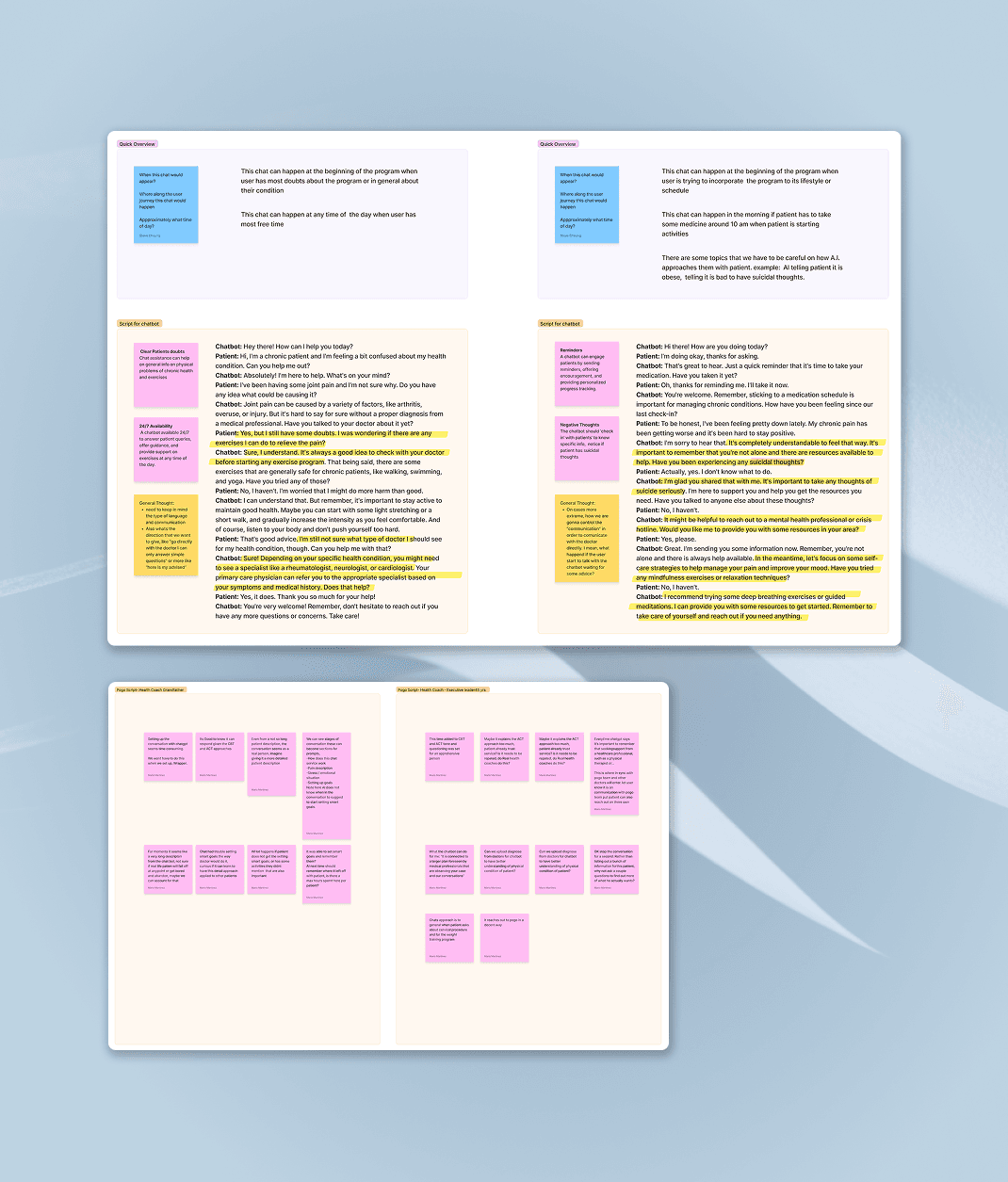
This work clarified how AI could responsibly support chronic pain patients while respecting clinical and ethical boundaries, aligning Pogo Health’s therapeutic principles with a tangible conversational experience.
At the same time, it reinforced the importance of designing AI as a system with clear behavioral rules rather than isolated responses. Translating clinical frameworks into interaction logic required balancing empathy, restraint, and clarity, while aligning cross-functional stakeholders around shared boundaries establishing a scalable foundation for future iterations and highlighting UX’s role as a bridge between behavioral science, technology, and human care.